
 “Herbal medicine? It’s just too gentle for me, so it doesn’t really work.”
Ever heard that one?
As a herbalist, I hear this kind of comment more often than you’d expect. There’s a widespread misconception that herbal medicine is somehow too soft to be effective—that because it comes from nature, it can’t possibly pack a punch.
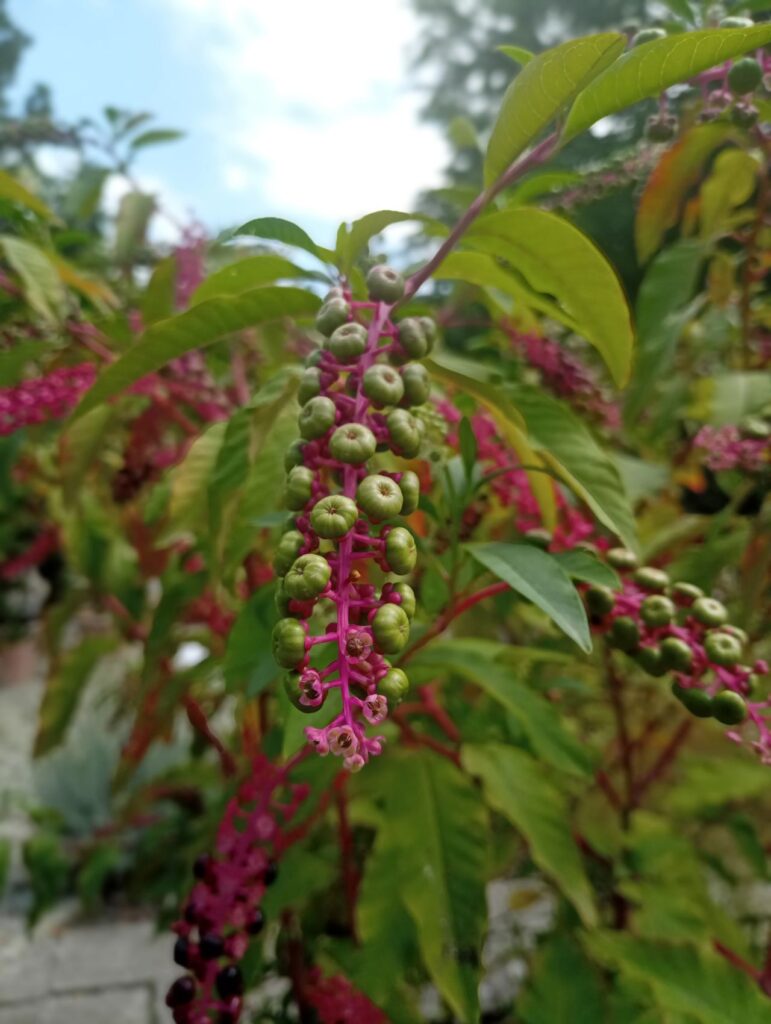
Let me introduce you to a plant that shatters that idea: Phytolacca americana, better known as Poke Root.
At first glance, this plant might not demand your attention. But make no mistake—Poke Root is no mild-mannered botanical. In fact, its use is restricted to qualified practitioners in the UK because of its strength and potential toxicity if misused. This is not a plant you pick up at a shop and take casually. It commands knowledge, care, and clinical respect.
In Western herbal medicine, Poke Root is a well-known lymphatic stimulant. Think of the lymphatic system as the body’s inner drainage and immune-support network—it clears out toxins, waste, and pathogens. When the lymph becomes stagnant, problems like chronic inflammation, swollen glands, and immune dysregulation can set in.
This is where Poke Root comes into its own.
Practitioners may use it to address:
Chronic allergies
Asthma
Lymphatic congestion or stagnation
It’s classified as a lymphagogue, meaning it promotes lymphatic flow. It helps to reduce swollen glands, encourage detoxification, and modulate the immune response—an invaluable ally in cases of persistent or recurring infection and inflammation. But again, due to its strength, it must be used with precision and care. This is not a “self-prescribing” kind of herb.
Its traditional use extends even further.
Poke Root has long been valued for its action on the skin and glandular structures, especially those associated with the mouth, throat, and reproductive tract. Traditionally, it’s been employed to support:
Tonsillitis
Ulcerations of the mucous membranes
Ovaritis (inflammation of the ovaries)
Glandular swellings
And quite notably, the mammary glands, where it can help relieve conditions like mastitis by promoting drainage and reducing inflammation.
What’s fascinating is that this powerful herb isn’t just revered in Western herbal traditions.
In Traditional Chinese Medicine (TCM), Poke Root—known as 商陆 (Shāng Lù)—has been used for centuries. Its traditional uses include:
Treating oedema and oliguria (low urine output)
Addressing ascites (fluid retention in the abdomen)
And externally, for conditions such as trauma, hemorrhage, and pyogenic skin infections (bacterial infections that produce pus)
In both Western and Eastern traditions, Poke Root is viewed as a strong, direct-acting plant that can shift deep-seated stagnation—whether lymphatic, fluid, or immune.
I was recently delighted to stumble upon this plant growing quietly in the Botanical Garden of Lucca, Italy. There it was, nestled among more familiar species, unassuming but undeniably potent. It served as a quiet yet powerful reminder: some of the most effective medicine in the world grows humbly, often unnoticed, in our gardens and wild spaces.
So the next time someone tells you herbal medicine is too gentle to be effective, tell them about Poke Root. It’s living proof that plants can be potent, purposeful, and—when used wisely—profoundly powerful allies in health.